

the architecture
when you were younger, you had no inhibitions. you drove the direct road to places that met your needs — connection, unconditional love.
but you reached a roadblock of some kind where that need wasn't met. maybe it was a parent, a partner, a friend. so you tried to find it a different way.
you took a detour. you reached for a strength, perhaps your ability to be of service, aware of another's needs. so you took that path instead, hoping to get closer to the need you wanted to fulfill. and it got you close, for a while. they responded. they gave you some appreciation. some form of love.
but you never got to where you really wanted, which was unconditional love.
and when you found that road often blocked, repeatedly blocked — not because of something in you, but just because — you made that detour into a habit. a reflex. something to do without thinking.
if i can't get unconditional love, i'll take the temporary approximation. i'll please. i'll perform. i'll feel something that touches on the hurt.
over time we forget there is a direct road even when it's available. we lose faith and start to take the detour right away, even when we don't know whether the direct route is there. we repeat the pattern, create a habit. a habit that actually forms a reaction in others that trains both of you to perform the detour instead of what you really need.
even when the road is open, you keep taking the detour, until you forget how to go the direct route, or that it even can exist.
this is what your humanity Quotient (hQ) measures. your ability to notice the roads and the detours and make a choice each time to take the direct route, to own your responsibility for the detour existing, to stay on the road even when the conditioning keeps telling you to take the shortcut to something less.
Agapic OS is learning the flow that will get you back to strengthening your hQ. to learn that detours are detours, and that you always have a choice to take the direct path, because you deserve it.
01 / the loop
how we get stuck and how we get out.
here is what happens inside when you hit the roadblock.
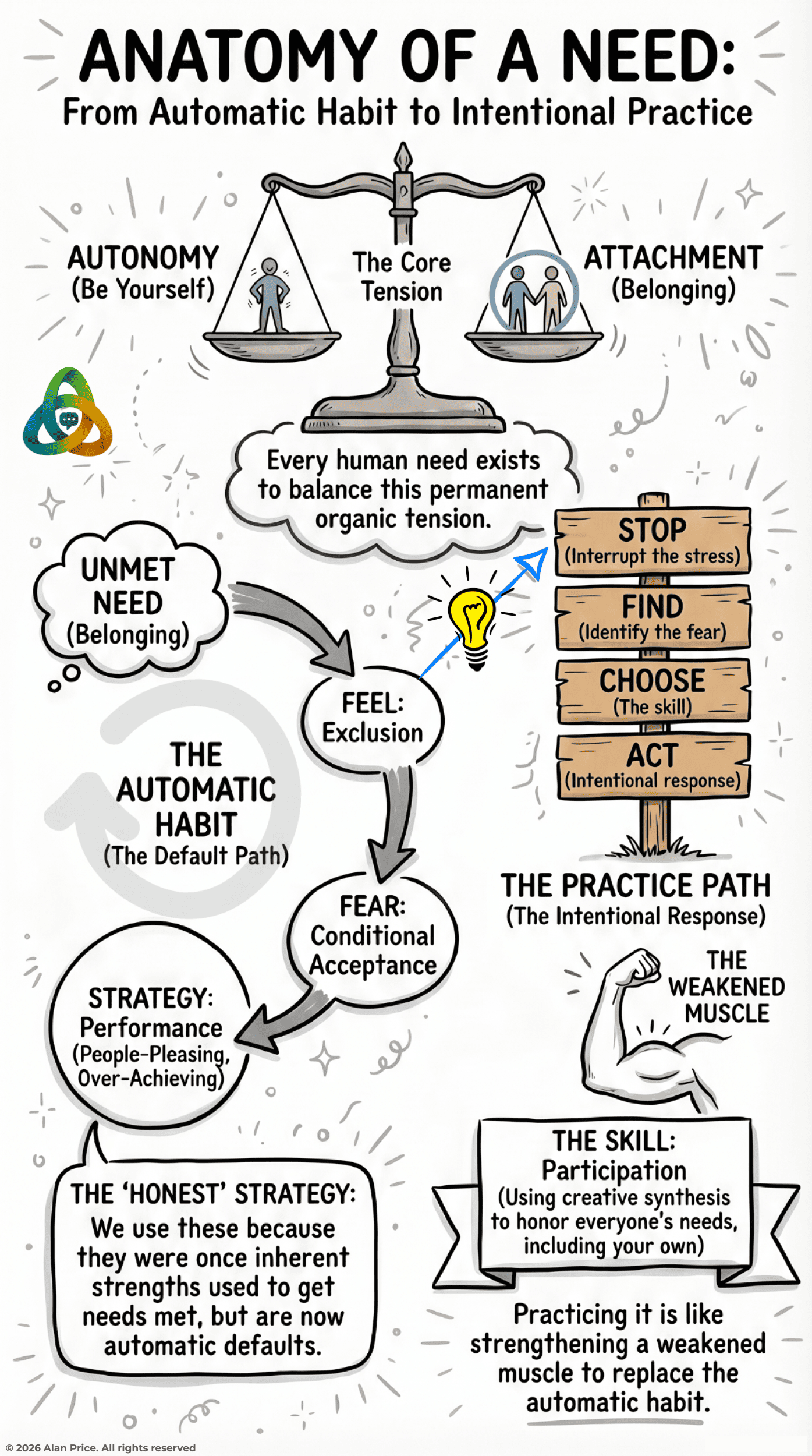
a need goes unmet. you feel it in your chest, your stomach, your throat. so you do something to make it stop. you blame. you shut down. you perform. you control. not because you are broken. because you learned somewhere that this is how to survive.
the loop is this: need goes unmet, you react without thinking, the reaction costs you something, and you never actually get what you needed.
Agapic OS is the practice of catching that moment. between the feeling and the reaction, there is a space. that is where the skills live.
02 / the toolkit
what you need, where you get trapped, and how to get out.
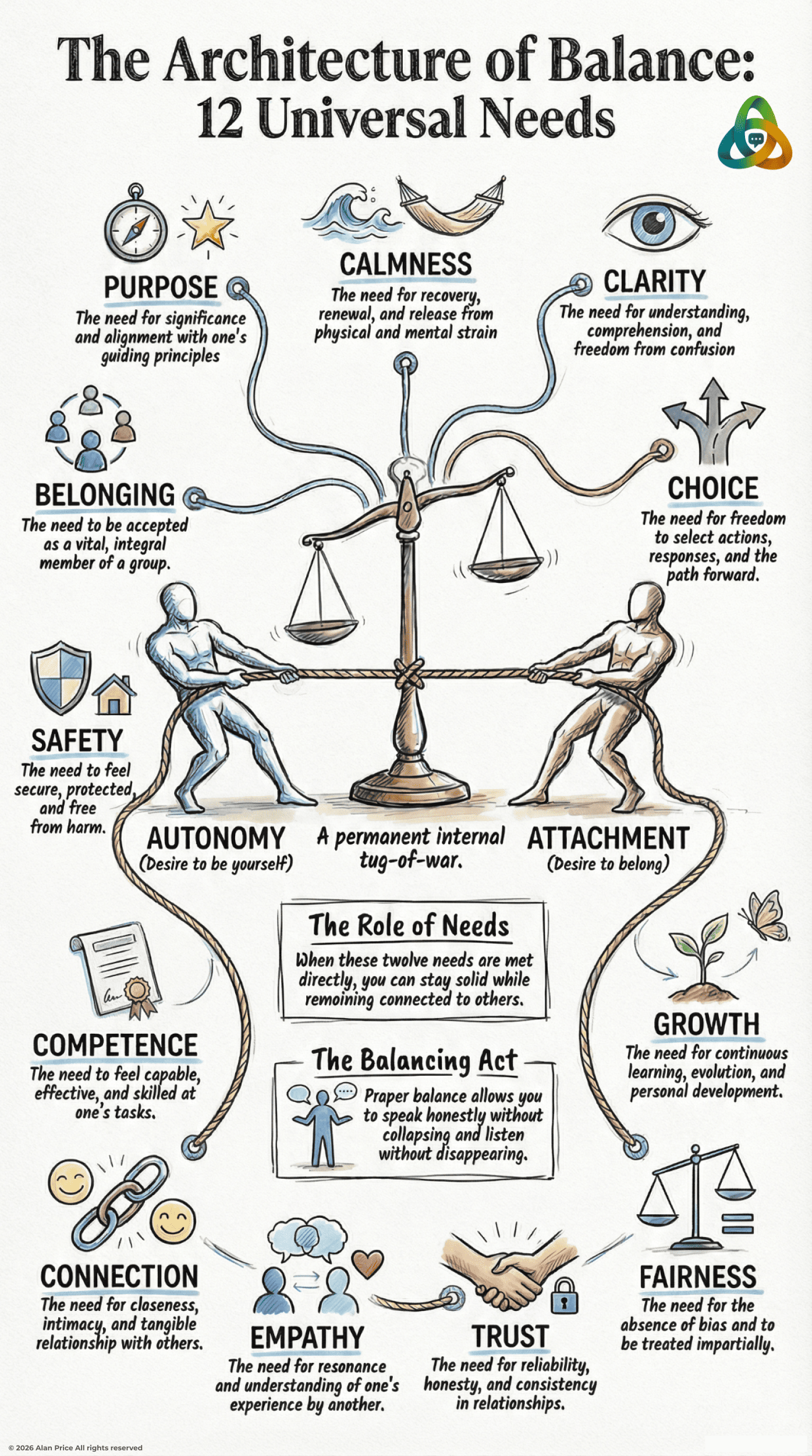
the needs
what you actually require to thrive. if a need is unmet, it creates pressure.
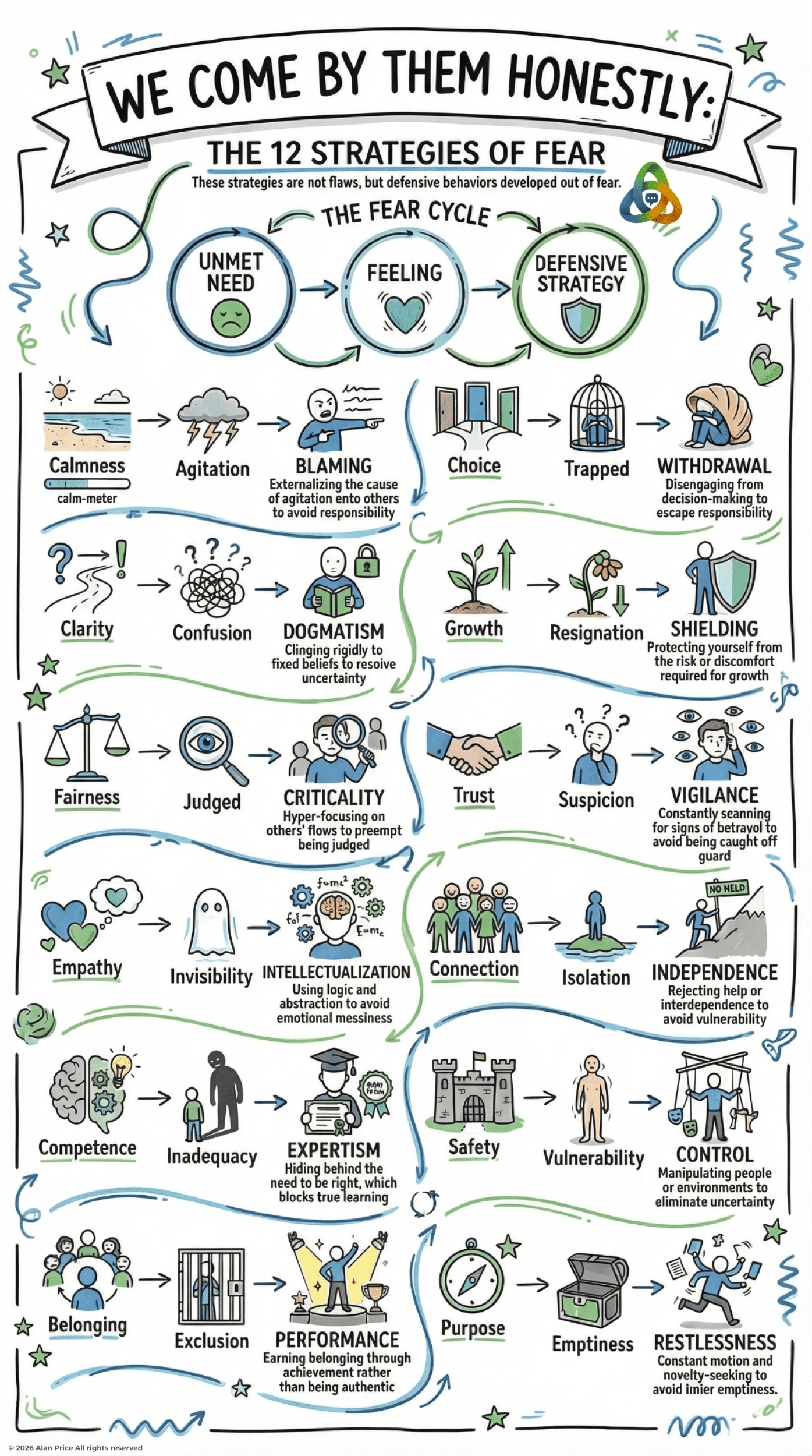
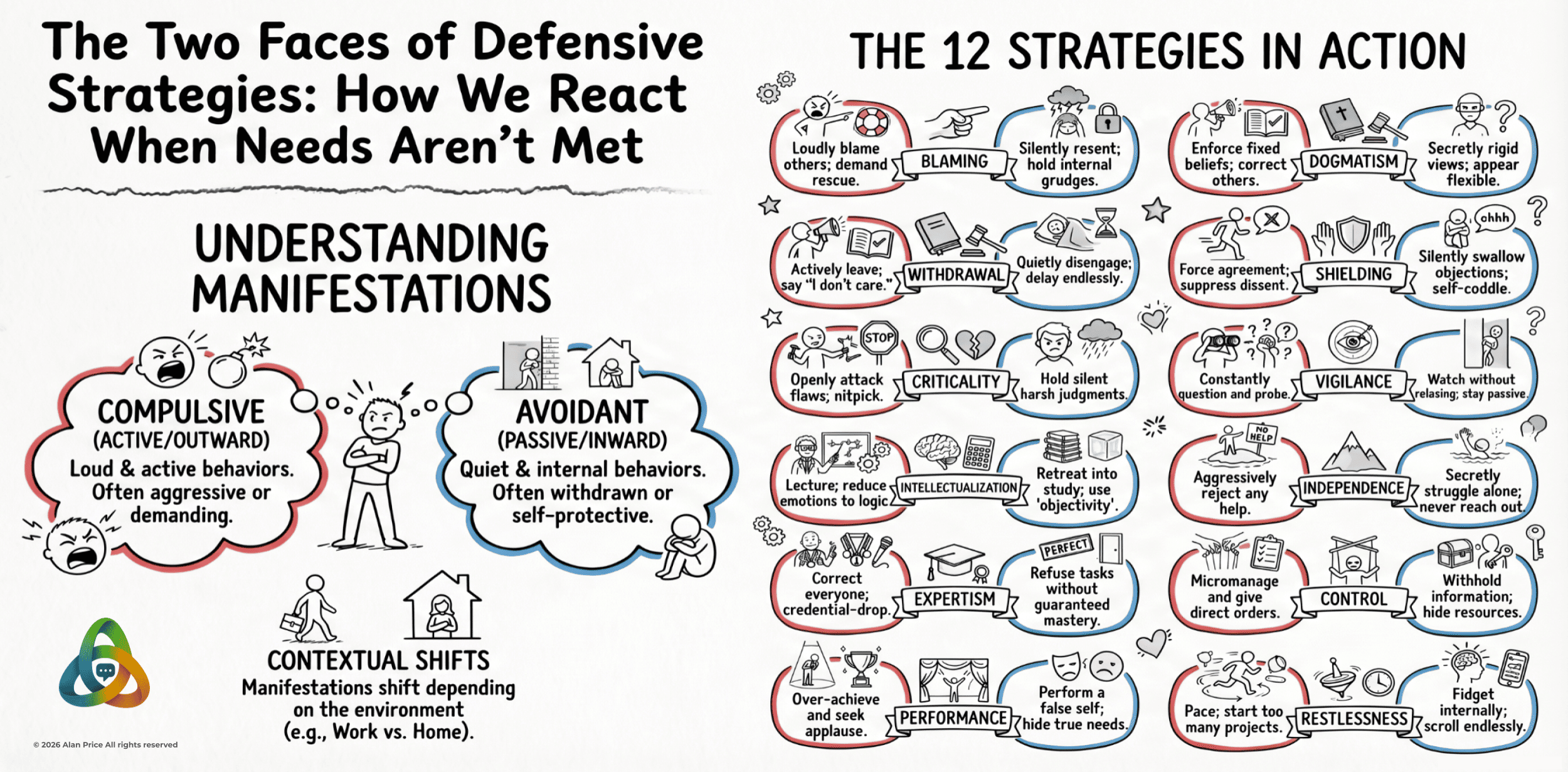
the strategies
the detours. where you are trapped. a strong strategy means a need is being met through a detour.
the skills
the way out. what you practice instead. a weak skill means you are vulnerable to the corresponding strategy.
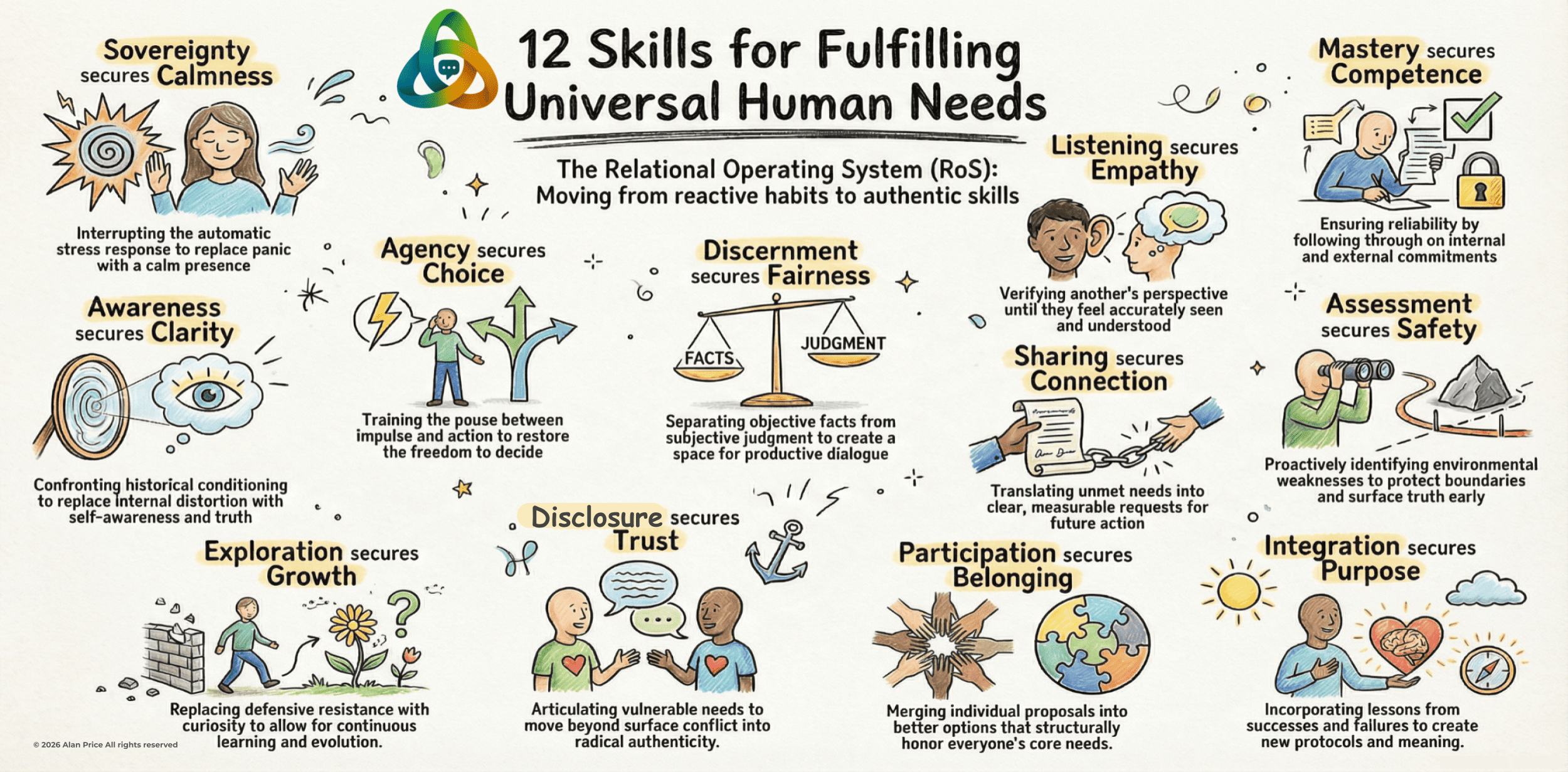
03 / your results
connecting the map to your scores.
your hQ report shows you which needs are being met and which are not, which strategies you rely on most, and which skills you can strengthen.
if a skill is weak, the corresponding strategy is likely strong. if a need is unmet, a strategy is likely running in its place.
tendencies
strategies hide in two tendencies. one will be stronger. that tells you something about where you are stuck.
compulsive — the strategy shows up loudly. the parent who slaps every child's hand at the dinner table. control is visible, forceful, undeniable.
avoidant — the strategy hides. you never delegate because that would reveal how much you need to control everything. so you just do it all yourself, silently.
your assessment will show you which tendency runs your strategies. that is the shape of your detour.
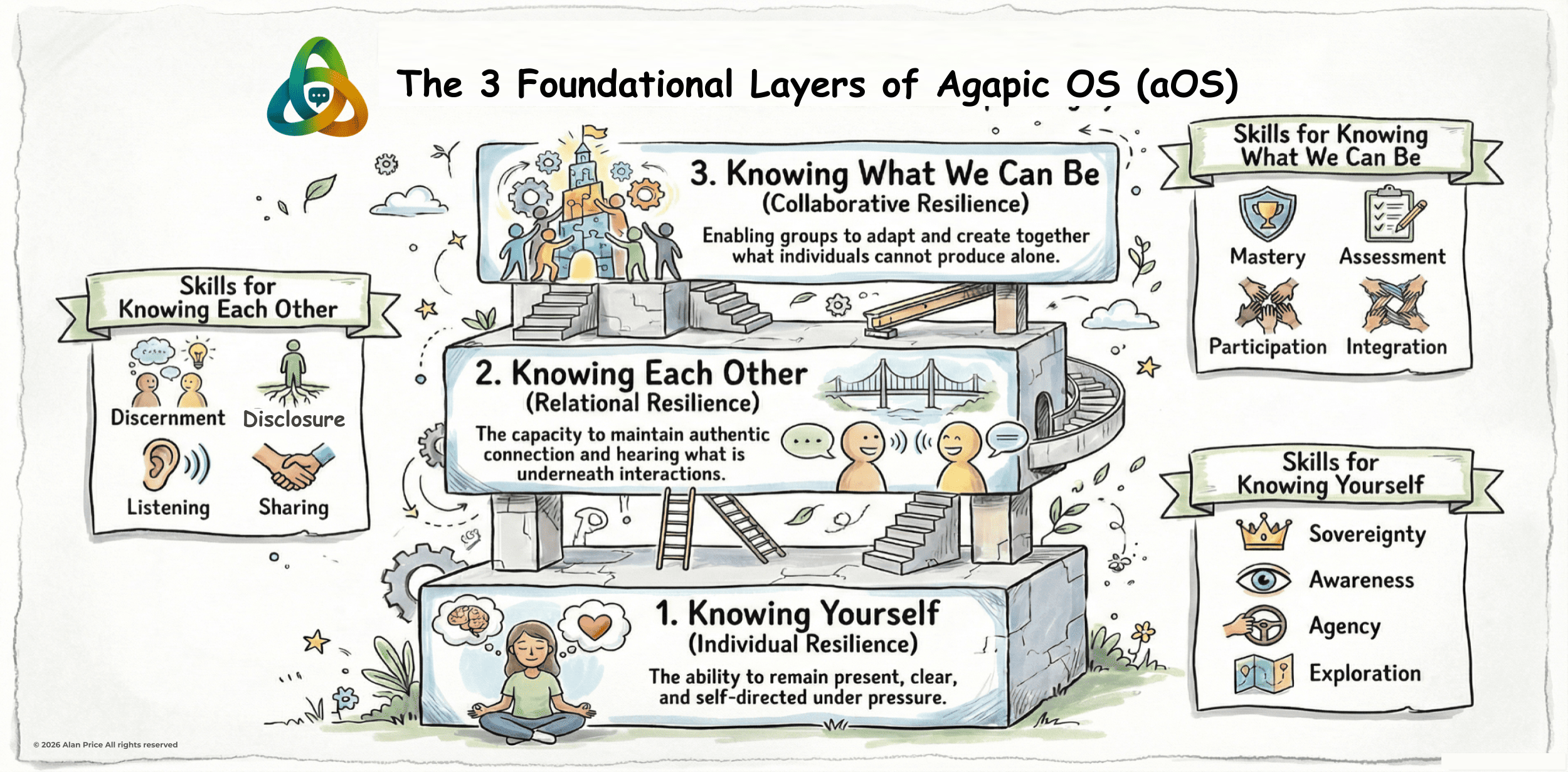
resilience layers
your skills are grouped into three layers. one will be weaker than the others. that tells you where to start.
knowing yourself — individual resilience. this is the foundation.
knowing each other — relational resilience. this requires the first layer. you cannot communicate clearly if you do not know what is true for you.
knowing what we can be — collaborative resilience. this requires the first two. you cannot build together if you cannot communicate.
your assessment will show you which layer is weakest. that is where you start. the layers above it cannot be stronger than the layer beneath.
the work is simple. not easy. but simple.
find the skill. practice it. the need will be met. the strategy will weaken.
Agapic OS provides the map. the work itself can take many forms — therapy, coaching, somatic practice, community, or the curriculum below.
for those ready to move all three layers at once, the 99-day curriculum is the most comprehensive path. other modalities can help you grow specific parts of your hQ. the map is the same. the path is yours to choose.
04 / library
the full documents, for those who want to go deeper.


